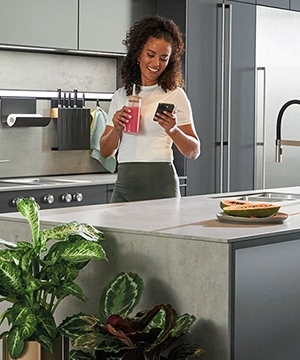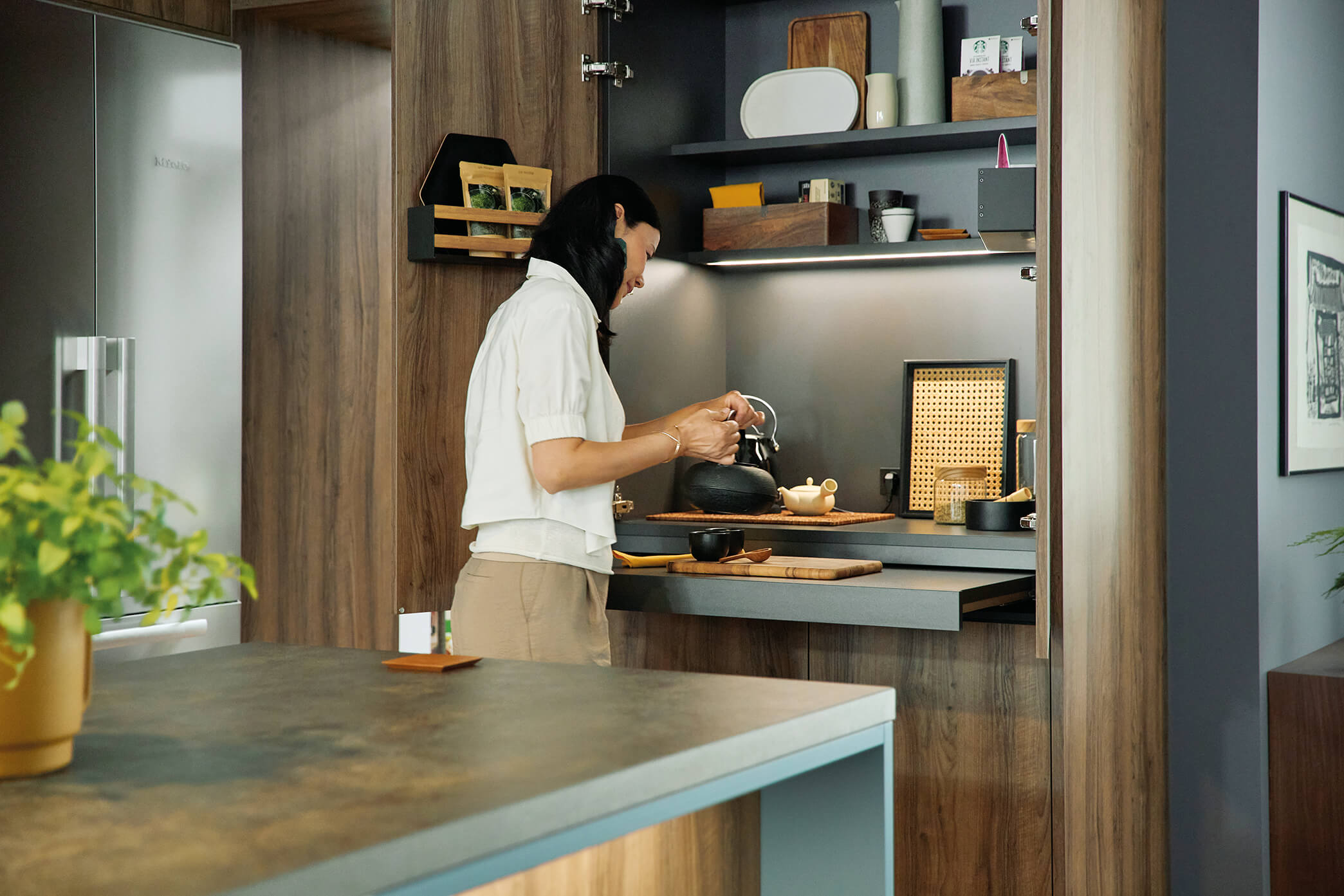
Humans have had kitchens for thousands of years, and have iterated immensely on the design with every generation. What began as a clean area around an open fire has evolved into the thriving smart environment beating at the heart of every home. In 2026, kitchen design begins with functionality. Instead of focusing first on storage or appliances, the design field instead starts by understanding human behavior. Determining how real people interact with their environment is an iterative philosophy that builds natural spaces. This human-centered approach creates modern kitchen designs that meet the needs of the home cook. In addition, through the use of spatial psychology and functional design, a kitchen designer can create a space that invites people in, providing both physical and emotional comfort amidst the stress of the modern day.
Psychology can inform design methodology to create space around the needs of the people who will use it. Modern kitchen design ideas make use of functional layouts in tandem with flawless aesthetics, to ensure the modern kitchen meets every need.
Behavior-Driven Layout Planning
Clumsy design leads to accidents in the kitchen, if not full-blown disasters. Planning layouts based on how humans move through an environment is one of the cornerstones of modern kitchen designs. Behavioral science tracks how human beings move at every step of the culinary process. Preparation, cooking, and cleaning are concrete stages of meal preparation, and areas can be designed to accommodate this natural flow in the kitchen. Kitchen designers refer to behavioral data to remove unnecessary objects and appliances, and optimize movement throughout the space.
A layout unbound by conventional limitation transforms the way a human uses the kitchen. For example, commonly used appliances can be placed within a visual corridor, or a stovetop can be built within natural arms reach of cooking utensils and equipment. Little, minor modifications create tangible benefits that improve the home cooks’ user experience.
Cognitive Simplicity in Design
A messy kitchen can create unbelievable exhaustion. This simple fact of life is corroborated by behaviorial psychology, and can inform modern kitchen designs in a number of ways. Creating clear, systemic organization is a practical requirement in a kitchen, not a design trend. Clean layouts, hidden storage space, harmonious cabinetry, and even neutral palettes can all be utilized to craft an environment that is comfortable and peaceful.
A clean kitchen is a beautiful thing. It promotes focus and creativity, preventing the cognitive overload that occurs with every piece of clutter. Even just being able to move around more easily can drastically enhance the comfort to be found in the kitchen, making the many hours spent there a dream, rather than a nightmare.
Emotional Comfort Through Material Choices
Materials influence perception and emotional responses. By utilizing warm and matte finishes with natural elements, modern kitchen designs evoke relaxation and comfort, rather than stress.
An approachable kitchen doesn’t need to miss out on utility. Real wood surfaces, gentle and bright lighting, and smooth textures all encourage people to spend time in the space. Combine this with an open-space plan, and it will be harder to keep people out of the kitchen than to bring them in.
Lighting Psychology and Productivity
Lighting is a strong psychological instrument; one that can define mood and behavior. Modern kitchen design ideas develop intentional, task-driven lighting for the 21st century. There are three types of lighting used in the kitchen:
- Task lighting. This is used to enhance concentration in food preparation and cooking, and should provide enough illumination to easily perform the task at hand.
- Ambient lighting. This is core to crafting a homey interior. Ambient lights should be warm, gentle, and natural.
- Accent lighting. Best used to highlight areas of interest, it should contrast in pleasant fashion from the other two.
Behavioral Zoning for Efficiency
Behavioral science can also inform how a kitchen is zoned. Zoning refers to the manner in which spaces are segmented in a kitchen. The stovetop should be thought of as its’ own zone, as well as the sink, coffee stations, breakfast bars, or any other activity-oriented location within the kitchen. Modern kitchen designs utilize behavioral data to create clearly defined zones for preparation, cooking, storage, and cleaning within the kitchen.
Optimizing these zones for their purpose is essential to promote safety and mobility. The coffee station should be near coffee mugs. The oven should not open in the same spot as the dishwasher. The microwave should not obstruct access to the stove. Creating a holistic vision of the kitchen ahead of time allows a talented kitchen designer to enhance efficiency and decision-making in the home-owners daily life.
Habit-Driven Storage Concepts
Default storage is bad storage. It fails to account for the individual needs of the home cook, and introduces inefficiencies into meal preparation. Modern kitchen design incorporates habit-based storage. This goes beyond the placement of cabinets and the pantry, and informs how the shelves and space inside them is constructed to aid everyday kitchen use.
Little things that save time are essential to habit-based storage. Spatulas and ladles next to the stovetop, oven-mitts within easy access of the oven itself, cleaning supplies near the sink. These choices reinforce efficient habits, and allow the kitchen to feel like a living, breathing space, instead of a lifeless machine.
Social Interaction and Spatial Psychology
Humans love to watch other humans cook. Modern kitchen designs are fully aware of the kitchen’s role as a social space. Utilizing behavioral psychology can inform open designs, promoting communication and teamwork in the heart of the household.
Open layouts encourage interaction between the cook and those they cook for. By transforming the kitchen into a communal space, the cooking feels less like work, and more like a celebration of life itself. Food is a joyous and beautiful way to connect with people, and food preparation should be able to feel the same way.
Stress-Reducing Design Elements
Behavioral psychology can also inform designs that minimize stress. Modern kitchen design ideas should be making use of relaxing colors, well-planned designs, and efficiency to create a controlled and orderly space.
With some low-intensity lighting, a smooth finish, and plenty of storage space, frustration is minimized for any food preparation activity. A predictable and organized space encourages the home cook to be far more efficient, while also ensuring they’re always comfortable.
Conclusion
While European kitchen design is still focused on ergonomics and storage efficiency, modern science allows kitchen designers to take a step further. A modern kitchen design emphasizes that psychological approach in its design philosophy. The end result is a space that is delightful and easy to work in. Structural efficiency and experienced design go hand-in-hand with each other, and the interplay between them elevates the kitchen with elegance.
Kitchen planning has evolved far beyond the question of “where should I build my fire?” Functional engineering and behavioral science has allowed kitchen designers to craft environments that cater perfectly to the humans who will spend their time in them.
Explore thoughtfully planned modern layouts and behavior-driven kitchen solutions at Novalina and bring an intuitive cooking space into your home.