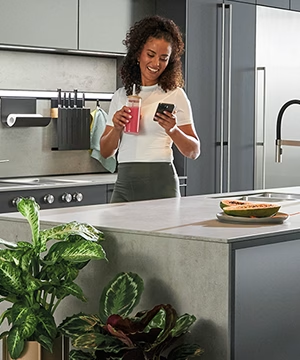
For a while, a “smart kitchen” was easy to spot. Screens, visible gadgets, and futuristic appliances made the technology impossible to miss. That is no longer the goal. Today, some of the most interesting new kitchen innovations are designed to work quietly in the background. Technology is being built into cabinetry, worktops, lighting, and storage, making the kitchen smarter without making it look high-tech.
This direction fits naturally with European kitchen design, where clean lines and careful integration have long been important. From the precision associated with German kitchens to the material-led approach of Italian design, the goal is clear. It is to make the kitchen smarter without making it look complicated.
What Is Making the Modern Kitchen Feel More Invisible?
The invisible kitchen is not actually hidden. Instead, the visual signs of work are reduced. An extractor can be integrated into the hob. A refrigerator can be integrated into cabinetry with the same finish as the surrounding units. Small appliances can be tucked into a breakfast cupboard, while charging points and lighting are built into surfaces.
These kitchen innovations keep the space feeling simple and uncluttered, even when sophisticated technology is working behind the scenes. Here are some of the changes making that possible.
Appliances Are Disappearing Behind Cabinetry
Integrated appliances are not new, but the level of concealment is becoming more refined. Refrigerators, freezers, dishwashers, and even some cooking appliances can now sit behind coordinated fronts. Tall cabinet runs begin to look more like architectural wall panelling than conventional kitchen storage.
This is particularly effective in open-plan homes, where the kitchen is always visible from the living or dining area. Hiding appliances helps the entire space feel more connected.
Extraction No Longer Needs to Dominate the Room
Large overhead cooker hoods can interrupt an otherwise clean European kitchen design, especially positioned above an island. Downdraft and hob-integrated extraction systems offer another option. By drawing steam and cooking odours closer to the source, they reduce the need for a prominent hood hanging above the worktop.
For modern European kitchen designs, this creates more freedom around islands and sightlines. Lighting, rtwork, or simply open space can become the visual focus instead.
Worktops Are Becoming More Functional
A worktop may look simple while quietly doing much more. Pop-up or concealed sockets keep charging points within reach without leaving outlets scattered across visible surfaces.
Wireless charging can also be incorporated into selected areas, while flush-mounted hobs create smoother transitions between preparation and cooking zones. The technology is there when needed and almost disappears when it is not.
Storage Is Getting Smarter on the Inside
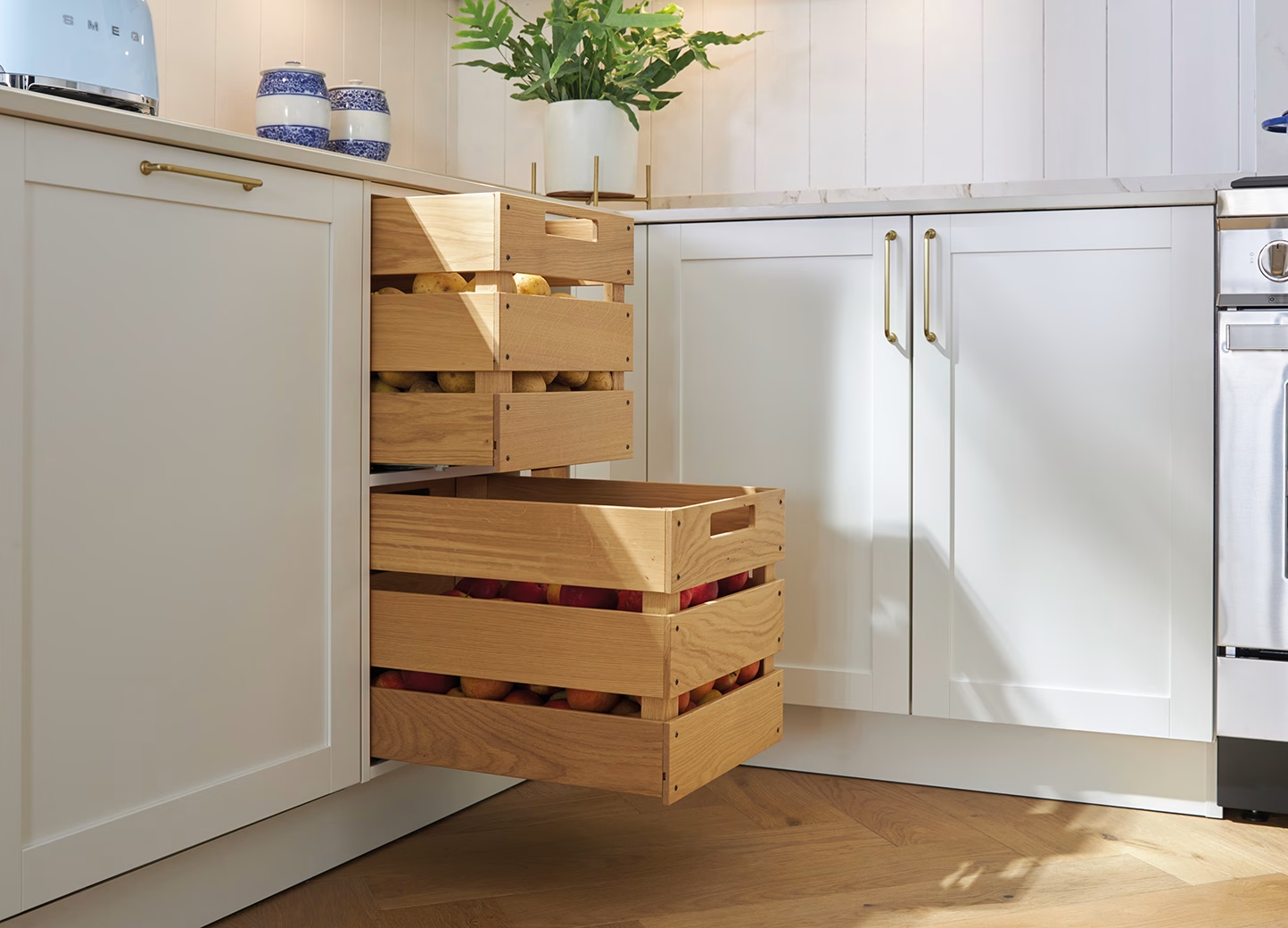
One of the most useful changes is happening behind closed doors. Deep drawers, internal organizers, pull-out pantry systems, corner solutions, and appliance garages make storage easier to access without adding visual clutter.
Pocket doors can even slide away completely when a breakfast station or preparation area is being used. This is an important part of the invisible kitchen innovation. A clean room is much easier to maintain when everyday items have a logical place to go.
Why This Approach Works So Well in European Kitchens
European kitchens are influenced by efficient use of space, integrated cabinetry, and careful material choices. Invisible technology builds naturally on those principles.
German kitchen engineering is characterized by precision and efficient storage, whereas Italian kitchens are often more concerned with materials and the shape of the architecture. A further influence comes from Scandinavian design; its focus is on simplicity and everyday living. The best contemporary European kitchens embrace these ideas without letting the technology take over the design.
Rather than wondering how intelligent this kitchen is, one should wonder how naturally it works.
Frequently Asked Questions
1. What is an invisible kitchen?
An invisible kitchen uses integrated appliances, concealed storage, discreet technology, and coordinated materials to reduce visual clutter. The kitchen remains fully functional, but many of the elements associated with cooking and storage blend into the surrounding cabinetry and architecture.
2. What new kitchen innovations are becoming popular?
New kitchen innovations include hob-integrated extraction, concealed charging, intelligent lighting, integrated appliances, advanced internal storage, pocket-door cabinetry, and connected controls. These innovations focus on improving convenience without making technology visually dominant.
3. Why are modern European kitchen designs becoming more minimal?
Minimalism allows kitchens to sit more comfortably within open-plan homes. Concealed appliances, uninterrupted cabinetry, and carefully integrated technology help modern European kitchen designs connect visually with adjoining dining and living spaces while maintaining full functionality.
4. Does smart technology work with traditional European kitchen design?
Yes. Smart features do not require a futuristic-looking interior. Connected appliances, discreet lighting, charging, extraction, and storage systems can be incorporated behind traditional or contemporary finishes, allowing the technology to support the kitchen without defining its appearance.
Conclusion
The smartest kitchen may soon be the one that does not look high-tech at all. Concealed appliances, in-built ventilation, intelligent storage, subtle lighting, and hidden controls are making everyday tasks easier while allowing interiors to remain calm and uncluttered. The next phase of European kitchen design is not about adding more technology to the room. It is about creating technology that feels like it was always meant to be there.
Explore Novalina to discover European kitchens where intelligent functionality and refined design work seamlessly together.