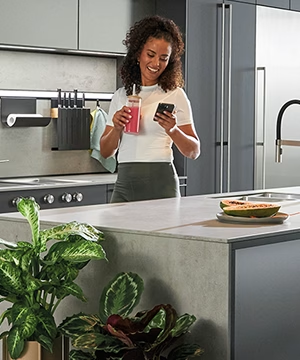
Houses in 2025 are making more conscious efforts towards keeping a check on the environmental impact, and modern kitchen designs are working towards this shift. The kitchen uses materials, energy and resources more than any other room in the house. Consequently, sustainability has become a characteristic of the planning and construction of kitchens. Innovation is currently aimed at waste reduction, durability and a kitchen that can be used for years without replacement and renovation.
Why Sustainability Is Redefining Kitchen Design in 2025
The development of modern kitchen design ideas represents the shift towards short-term trends and long-term accountability. Homeowners desire kitchens that age well, perform efficiently, and do not cause much strain on the environment. Sustainability is considered during the planning, materials, manufacturing, and installation stages. The innovations will ensure that the kitchens provide a visual appeal as well as measurable environmental advantages without compromising comfort or usability.
- Smarter Material Selection for Long-Term Use
One of the main sustainability drivers of modern kitchen designs is material innovation. Designers are selecting higher-quality materials with longer life expectancy, lower maintenance needs, and the ability to be recycled or repurposed. Engineered boards that are less wasteful, wood that is sourced in a responsible manner and laminates that are of strong quality are used to make kitchens last longer. Longer-lasting materials mean fewer replacements over time, which significantly reduces environmental impact while maintaining consistent design quality. - Optimized Kitchen Carcass Engineering
Sustainability is now spread to the technical structure of the kitchen carcass dimensions. Optimized and standard carcass size minimizes waste of materials both in production and installation. Exact dimension means a perfect distribution of load, greater durability and simplicity in replacing a single part. This is an engineering method that makes cabinets stable and last longer, so that it promotes sustainability by being structurally efficient and just surface level changes.
- Modular Cabinet Systems Reducing Waste
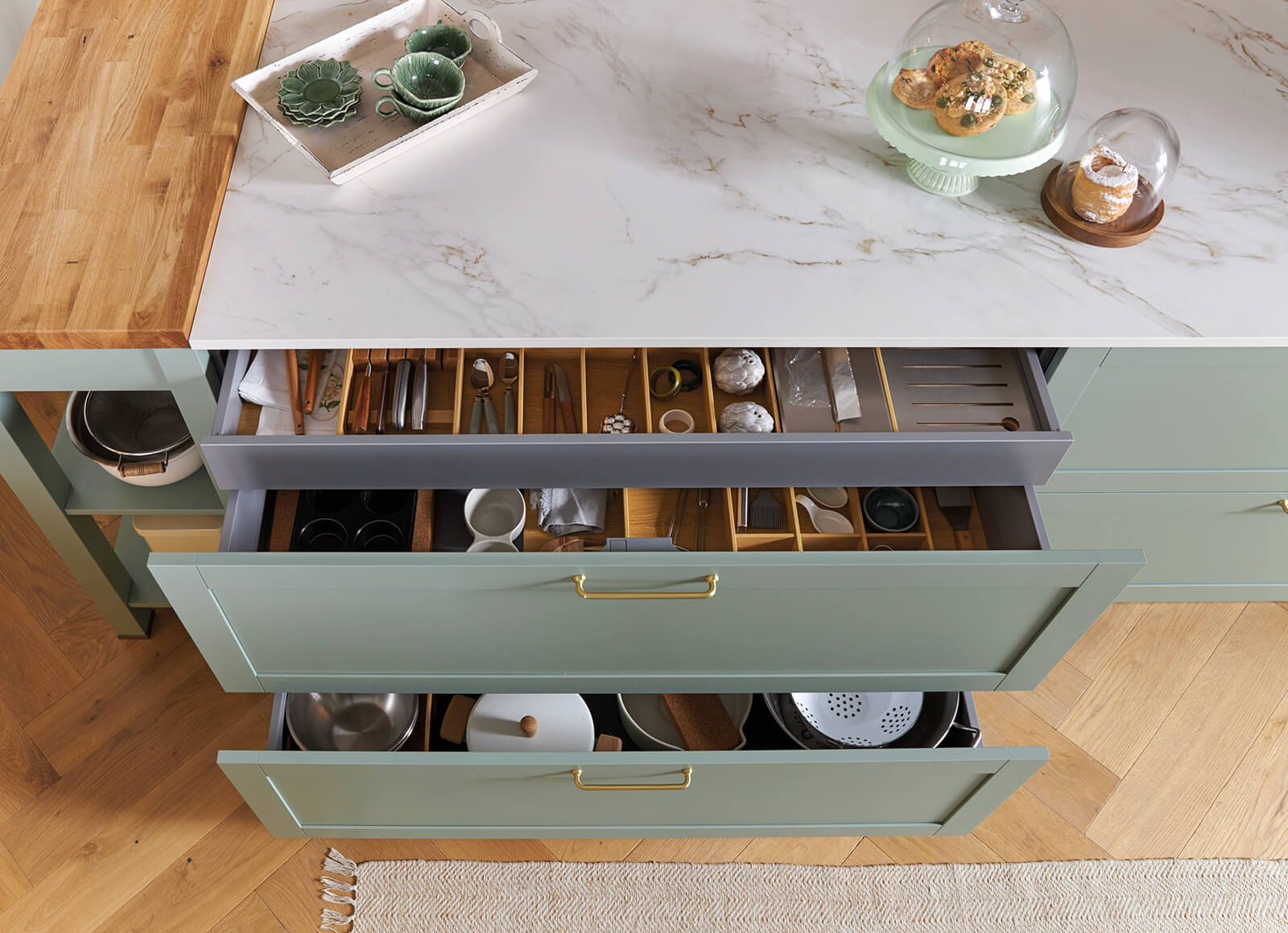
Modularity is one of the most influential new developments in modern kitchen design ideas. Kitchens can be refurbished or repaired without being completely demolished. Units can be changed, resized or rearranged individually when the requirements vary. This minimizes the level of construction waste and increases the durability of the kitchen. Modular thinking supports sustainability, and helps homeowners fight against consumerism and planned obsolescence. - Efficient Manufacturing of Kitchen Unit Structures
The development of the kitchen unit carcasses manufacturing has enhanced sustainability greatly. Accurate production eliminates offcuts, defects and wastage of material. Better bonding methods and reinforcement of the structure enhance strength with the use of fewer raw materials. These innovations also guarantee the longevity of cabinets with reduced environmental impact of manufacturing. - Energy-Conscious Layout Planning
Modern kitchen designs in 2025 have considered layout efficiency as the key aspect. Kitchens will be designed in such a way that they utilize as much natural light as possible, reduce unused appliances, and promote effective movement. Layout planning decreases the usage of energy through the reduction of artificial lighting and heating. Such minor design choices also contribute to sustainability, as well as enhancing their everyday comfort and utility. - Material Thickness Optimization for Sustainability
Smart use of material thickness has been enabled through engineering improvements in the kitchen carcass dimensions. Rather than applying heavy materials throughout the structure, designers strengthen high-stress points only. This will minimize material usage without loss of strength. Streamlined thickness reduces weight, affects transportation, and minimizes the use of resources, making kitchens sustainable when it comes to production and installation. - Designing for Disassembly and Reuse
Forward-thinking modern kitchen design ideas now consider how kitchens can be dismantled responsibly. The design of cabinets and fittings is such that it is possible to separate, reuse or recycle them. This method will minimize the waste in landfills and contribute to the principles of the circular design principle. Dismantling kitchens assists homeowners in making environmentally friendly decisions at the end of a kitchen’s life cycle. - Improved Longevity Through Structural Integrity
The structural strength is a significant attribute of sustainable kitchen unit carcasses. Reinforced joints, strengthened panels, and moisture-resistant works allow the elimination of premature breakdown. The longer the cabinets serve, the fewer resources are used in the long run. Longevity-oriented engineering is where sustainability is implemented by ensuring that it can be achieved through the use of durable materials instead of regular replacement or cosmetic changes.
Conclusion
The future of kitchen planning is rooted in thoughtful innovation, with modern kitchen design ideas in 2025 shaped by sustainability at every level. From streamlined carcass engineering and modularity to smarter designs and more resistant materials, kitchens have been created to last longer and consume less. These inventions demonstrate that sustainability is not a restraint to design creativity but rather an enhancement of it that produces responsible, functional and long-term built kitchens.